Things Fall Apart PDF by Chinua Achebe: A Comprehensive Study Plan
Chinua Achebe’s impactful novel, Things Fall Apart, first published in 1959, explores pre-colonial Igbo life and the disruptive arrival of European influence.
Numerous PDF versions are available online, facilitating study of Okonkwo’s tragic story and the cultural clashes depicted within the narrative.
The book details the life of Okonkwo, a respected leader banished for an accidental killing, and the subsequent societal shifts.
Historical Context: Colonial Nigeria in the Late 19th Century
Chinua Achebe’s Things Fall Apart is deeply rooted in the historical realities of late 19th-century Nigeria, a period marked by intensifying European colonialism. Prior to significant British influence, the region comprised diverse ethnic groups, each with distinct political and social structures. The Igbo people, central to the novel, inhabited a decentralized society organized around villages and kinship networks, lacking a centralized ruling authority that would have facilitated easy colonial control.
The late 1800s witnessed the “Scramble for Africa,” with European powers aggressively partitioning the continent. British interest in Nigeria stemmed from economic motives – trade in palm oil, and later, other resources – and strategic considerations. Through treaties, military force, and political maneuvering, Britain gradually established its dominance, culminating in the formal colonization of Nigeria. This process wasn’t a swift takeover but a series of engagements and adjustments.
The arrival of British administrators, missionaries, and traders fundamentally altered the existing social order. Colonial policies often disregarded indigenous customs and traditions, imposing Western legal systems, educational practices, and religious beliefs. This clash of cultures forms the core tension in Things Fall Apart. Achebe meticulously portrays the Igbo world before its substantial disruption, providing a crucial historical backdrop to understand the tragedy unfolding within the narrative. The novel isn’t merely a fictional story; it’s a poignant reflection of a specific historical moment and its devastating consequences for African societies.
Understanding this historical context is vital for interpreting the novel’s themes of cultural collision, loss of identity, and the complexities of resistance and adaptation.
The Igbo Culture Before Colonialism
Before the arrival of British colonialism, Igbo society was a complex and vibrant tapestry of traditions, beliefs, and social structures. It was fundamentally decentralized, organized around autonomous villages and kinship ties, rather than a centralized kingdom. Decisions were made through communal gatherings of elders, emphasizing consensus and participation. This democratic element is crucial to understanding the Igbo resistance to external rule.
Chinua Achebe meticulously depicts this pre-colonial world in Things Fall Apart, showcasing a society deeply connected to the land and governed by a rich cosmology. Religion centered on a pantheon of deities and ancestral spirits, with a strong belief in the power of chi – personal spiritual forces; Yam farming was the cornerstone of the Igbo economy and a symbol of masculinity and prosperity. Social status was earned through achievement, hard work, and demonstrable skills.
Masculinity was highly valued, measured by strength, agricultural success, and social standing, as exemplified by Okonkwo’s relentless pursuit of status. However, women held significant roles in Igbo society, particularly in agriculture, trade, and religious practices. Family was paramount, with elaborate kinship systems dictating social obligations and responsibilities. Storytelling, music, and dance were integral parts of Igbo cultural life, transmitting history, values, and beliefs across generations.
Achebe’s portrayal reveals a sophisticated and self-sufficient culture, capable of adapting and evolving. The novel serves as a powerful testament to the richness and complexity of Igbo life before the disruptive forces of colonialism irrevocably altered its course.
Okonkwo: The Protagonist and His Tragic Flaw
Okonkwo, the central figure in Chinua Achebe’s Things Fall Apart, is a complex and compelling character driven by a profound fear of weakness and failure. He relentlessly strives for strength, status, and recognition within his Igbo community, Umuofia, largely motivated by a deep-seated aversion to resembling his effeminate and unsuccessful father, Unoka.
Okonkwo’s tragic flaw lies in his inflexible masculinity and inability to adapt to change. He equates all forms of tenderness or emotional vulnerability with weakness, leading to harshness in his relationships with his family, particularly his sons. His ambition and drive propel him to achieve great success as a wrestler, farmer, and warrior, but his rigid adherence to traditional values blinds him to the evolving realities of his world.
His impulsive actions, fueled by pride and a fear of appearing weak, ultimately lead to his downfall. The accidental killing of a clansman results in his exile, severing his connection to his community and diminishing his status. Upon his return, he finds Umuofia irrevocably changed by the arrival of Christian missionaries and colonial rule.
Unable to reconcile himself to the new order and unwilling to compromise his principles, Okonkwo’s despair culminates in his suicide, a desperate act of defiance and a poignant symbol of the clash between tradition and change. He embodies both the strengths and vulnerabilities of Igbo society, making his tragedy all the more resonant.
The Role of Masculinity and Strength in Igbo Society

In Chinua Achebe’s Things Fall Apart, masculinity and physical strength are paramount values within Igbo society, deeply interwoven with social status, honor, and a man’s ability to provide for his family. A man’s worth is largely measured by his achievements in agriculture – yam cultivation being particularly significant – his prowess as a warrior, and his ability to accumulate wealth and titles.
The Igbo culture emphasizes a hierarchical structure where men dominate, and women’s roles are largely confined to the domestic sphere. Displays of emotion, particularly vulnerability, are considered feminine and therefore undesirable in men. Okonkwo embodies this ideal, relentlessly pursuing strength and rejecting anything perceived as weakness, stemming from his disdain for his father, Unoka, who was considered a failure due to his gentle nature and lack of ambition.
Strength isn’t solely physical; it also encompasses industriousness, courage, and the ability to command respect. However, this rigid definition of masculinity creates a pressure cooker environment, stifling emotional expression and fostering a culture of aggression. The novel illustrates how this emphasis on strength can lead to destructive behaviors, as seen in Okonkwo’s violent tendencies and his inability to adapt to changing circumstances.

Ultimately, Achebe critiques the limitations of this hyper-masculine ideal, demonstrating how it contributes to the fracturing of Igbo society and Okonkwo’s tragic fate. The novel subtly questions whether such a narrow definition of strength truly serves the community’s best interests.
Family Structure and Social Hierarchy in Umuofia
Chinua Achebe’s Things Fall Apart vividly portrays the complex family structure and rigid social hierarchy of Umuofia, an Igbo village in late 19th-century Nigeria. The family unit is patriarchal, with the father serving as the head, responsible for providing for and disciplining his wives and children. Multiple wives are common, signifying a man’s wealth and status, and each wife maintains her own hut within the compound.
Children inherit their social standing from their fathers, and lineage plays a crucial role in determining one’s position within the community. The social hierarchy is not solely based on wealth; titles earned through achievements – such as wrestling victories, agricultural success, or contributions to the village – are highly valued and confer significant respect. These titles are displayed through visible symbols, like the ichi marks on a man’s face.
Umuofia’s society operates on a system of age grades, where men progress through different ranks based on their age and experience, assuming increasing responsibilities within the village. The elders, known as the ndi ichie, hold considerable power and serve as judges and advisors. The egwugwu, masked spirits representing the ancestors, enforce laws and resolve disputes, embodying the collective authority of the community.
This intricate social structure, while providing stability and order, also reinforces inequalities and limits social mobility; Achebe demonstrates how this rigid system, though deeply ingrained in Igbo culture, becomes vulnerable to disruption with the arrival of colonial forces.
Chinua Achebe’s Things Fall Apart meticulously details the gradual introduction of Christianity and Western influence into the Igbo village of Umuofia, marking a pivotal turning point in the narrative. Initially, the arrival of missionaries is met with curiosity and cautious acceptance. Mr. Brown, the first missionary, adopts a diplomatic approach, learning the local customs and attempting to understand Igbo beliefs before directly challenging them.
He establishes a school, attracting some villagers, particularly those marginalized within the traditional social structure – the osu, or outcasts – offering them education and a sense of belonging. However, the appeal of Christianity extends beyond the marginalized, as its message of compassion and forgiveness resonates with some, offering an alternative to certain harsh aspects of Igbo tradition.
The arrival of Reverend James Smith, Mr. Brown’s successor, signals a shift towards a more aggressive and uncompromising approach. Smith vehemently condemns Igbo customs and beliefs as heathenistic, demanding complete adherence to Christian doctrine. This uncompromising stance creates deep divisions within the community, fueling resentment and resistance.
Alongside Christianity, Western administrative and economic systems begin to penetrate Umuofia, introducing concepts like colonial courts and trade, further disrupting the traditional way of life. Achebe illustrates how this multifaceted Western influence, initially subtle, progressively undermines the foundations of Igbo society, setting the stage for conflict.

The Clash of Cultures: Igbo Traditions vs. Colonial Rule
Chinua Achebe’s Things Fall Apart powerfully portrays the inevitable and devastating clash between the deeply rooted Igbo traditions and the encroaching forces of British colonial rule. The novel doesn’t present a simple dichotomy of good versus evil, but rather a complex interplay of differing worldviews and values.
Igbo society, with its emphasis on communal harmony, ancestral veneration, and a nuanced system of justice, stands in stark contrast to the rigid, hierarchical structure and legal framework imposed by the colonial administration. The Igbo’s decentralized political system, relying on councils of elders, is ill-equipped to deal with the centralized authority of the District Commissioner.
The introduction of colonial courts directly challenges the Igbo’s traditional methods of dispute resolution, undermining the authority of the elders and creating a sense of injustice. The missionaries’ condemnation of Igbo religious beliefs and practices as “heathen” further exacerbates the tension, attacking the very core of Igbo identity.
As colonial influence expands, the Igbo’s traditional ways of life – farming, social gatherings, and religious ceremonies – are increasingly disrupted. The novel highlights the Igbo’s attempts to adapt and resist, but ultimately demonstrates the overwhelming power of the colonial forces and the tragic consequences of cultural collision. This clash isn’t merely political; it’s a fundamental struggle for cultural survival.
The Impact of the Missionaries on Igbo Beliefs

Chinua Achebe’s Things Fall Apart meticulously details the profound and disruptive impact of Christian missionaries on the deeply held spiritual beliefs of the Igbo people. The arrival of missionaries isn’t simply a religious event; it’s a cultural invasion that challenges the foundations of Igbo society.
Initially, the missionaries focus on converting outcasts and those marginalized within the Igbo community – the osu, or those dedicated to the gods – offering them acceptance and a sense of belonging. This strategy proves remarkably effective, creating a foothold within Umuofia and attracting new converts.
The missionaries’ condemnation of Igbo deities and traditional practices as “evil” and “heathen” directly clashes with the Igbo’s ancestral veneration and polytheistic beliefs. The Igbo worldview, which embraces a complex spiritual universe, struggles to reconcile with the missionaries’ monotheistic doctrine.
The introduction of Christianity also impacts Igbo social structures. The missionaries’ emphasis on individual faith challenges the communal nature of Igbo religion, where spirituality is interwoven with social life. The novel illustrates how the missionaries’ teachings create divisions within families and communities, as converts abandon traditional beliefs and practices.

Ultimately, the missionaries’ presence contributes to the erosion of Igbo cultural identity and the disintegration of traditional values, paving the way for further colonial domination.
Okonkwo’s Exile and Its Consequences
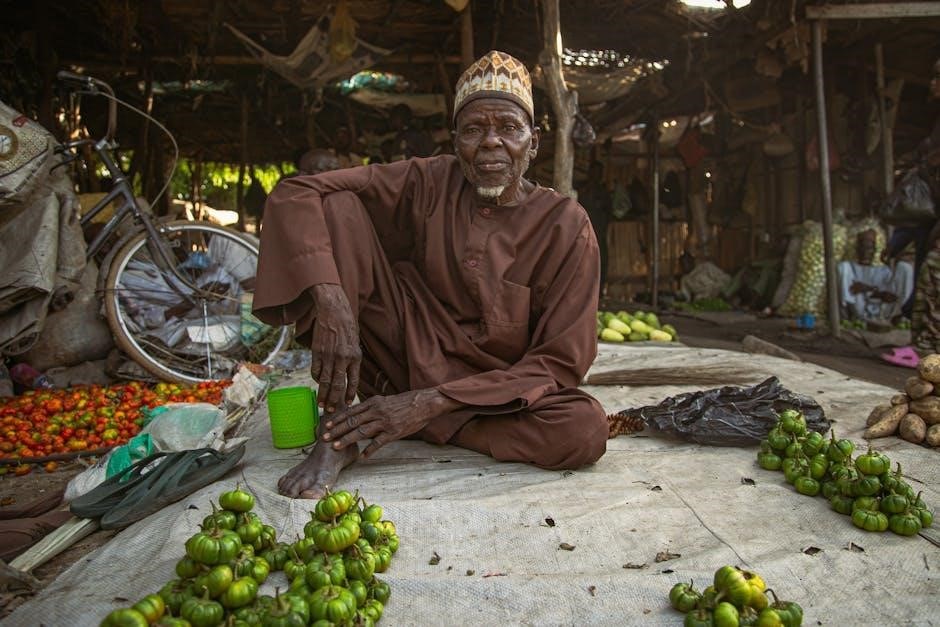
Okonkwo’s accidental killing of Ezeudu’s son, a grave transgression within the Igbo community, results in his exile from Umuofia for seven years. This forced removal isn’t merely a physical displacement; it’s a devastating blow to his personal identity and social standing.
Exile strips Okonkwo of his hard-earned status as a respected warrior and leader. He’s forced to rebuild his life in his mother’s homeland, Mbanta, a place he views with disdain as it represents feminine weakness – a concept he vehemently rejects.
During his exile, Okonkwo grapples with feelings of frustration, helplessness, and a growing sense of despair. He struggles to adapt to a life devoid of the recognition and power he once enjoyed. His exile coincides with the increasing influence of Christian missionaries in Umuofia, further fueling his anxieties.
The seven years in Mbanta are marked by a gradual erosion of Okonkwo’s control over his own destiny. He witnesses the changing dynamics of his clan from afar, unable to intervene or protect his community from the encroaching colonial forces.
Upon his return to Umuofia, Okonkwo finds a society irrevocably altered by the presence of the white man. His attempts to reclaim his former position and restore traditional values are met with resistance, ultimately leading to his tragic downfall.
The Changing Dynamics of Umuofia During Okonkwo’s Absence
Okonkwo’s seven-year exile witnesses a profound transformation within Umuofia, primarily driven by the arrival of Christian missionaries and the establishment of colonial administration. Initially met with curiosity, the missionaries gradually gain converts, attracting the marginalized and disaffected members of the clan.
The introduction of a new religion challenges the traditional Igbo belief system, creating divisions within the community. Nwoye, Okonkwo’s son, is particularly drawn to the Christian message of compassion and forgiveness, finding solace in its embrace – a source of immense distress for his father.
The establishment of a colonial court and administrative structure further undermines the authority of the Igbo elders and traditional governance systems. The white District Commissioner’s presence represents a direct challenge to Umuofia’s autonomy and self-determination.
A new economic order emerges with the arrival of colonial trade, offering alternative opportunities but also disrupting traditional agricultural practices and social relationships. The construction of a church and a trading post symbolizes the physical and ideological encroachment of the colonial power.
By the time Okonkwo returns, Umuofia is no longer the society he left behind. The seeds of cultural disintegration have been sown, and the clan is grappling with a complex interplay of resistance, adaptation, and internal conflict, setting the stage for a tragic confrontation.
The Return of Okonkwo and the Escalating Tensions
Okonkwo’s return to Umuofia is marked by a growing sense of alienation and frustration. He finds a community irrevocably altered by the presence of Christianity and colonial rule, a stark contrast to the society he once knew and dominated. His attempts to reassert his authority and revive traditional values are met with resistance and indifference.
The escalating tensions are fueled by a series of incidents that highlight the clash between Igbo customs and colonial law. The destruction of a Christian church by zealous villagers, intended as a defiant act, further provokes the colonial administration and leads to the arrest of several Igbo leaders.
Okonkwo is deeply angered by the perceived weakness and lack of resolve within the clan, particularly the willingness of some to negotiate with the white missionaries and accept their authority. He yearns for a forceful response, a return to the traditional methods of defending Umuofia’s honor and independence.
A pivotal meeting is called to decide how to respond to the colonial presence, but the discussion is marred by internal divisions and a lack of unified action. The District Commissioner’s manipulative tactics and the ambiguous nature of colonial justice contribute to the growing sense of despair.
The final confrontation arises from a minor incident involving a court messenger, which triggers Okonkwo’s impulsive and tragic act – a desperate attempt to reclaim control and restore the dignity of his people, ultimately leading to his demise.
The District Commissioner and the Colonial Administration
The District Commissioner embodies the detached and paternalistic attitude of the British colonial administration in Things Fall Apart. He views the Igbo people not as equals, but as subjects to be governed and “civilized,” exhibiting a profound lack of understanding of their complex social structures and cultural values.
His primary concern is maintaining order and extending British influence, often dismissing Igbo traditions as primitive or superstitious. He operates under the belief that British rule is inherently beneficial, bringing progress and stability to a “backward” society. This conviction blinds him to the devastating impact of colonialism on the Igbo way of life.

The administration’s methods are characterized by a combination of coercion and manipulation. They establish courts and laws that undermine traditional Igbo governance, appoint local leaders willing to collaborate, and utilize missionaries to spread Christianity and Western education.
The Commissioner’s perspective is revealed through his planned book, intended to document his experiences in Africa. He envisions a brief, condescending chapter on the “pacification” of the lower Niger region, reducing the complex history and struggles of the Igbo people to a mere footnote in his career.
His final act – ordering the removal of Okonkwo’s body – demonstrates his complete disregard for Igbo customs and beliefs, highlighting the dehumanizing nature of colonial power and the tragic consequences of cultural imperialism.
The Trial and Humiliation of the Igbo Leaders
The arrest and trial of the six Igbo leaders represent a pivotal moment of colonial injustice in Things Fall Apart. Triggered by the destruction of the church – a desperate act of resistance against the encroaching colonial influence – the event exposes the fundamental power imbalance and the inherent bias of the British legal system.
The District Commissioner, acting as both judge and jury, conducts a sham trial devoid of fairness or due process. The Igbo leaders are not given a meaningful opportunity to defend themselves or explain their actions within the context of their cultural beliefs. The court proceedings are conducted in English, a language most of the accused do not understand.
The charges leveled against them are based on British law, which clashes directly with Igbo customary law and notions of justice. The leaders are convicted and sentenced to public flogging and a hefty fine, a punishment considered deeply humiliating and degrading within Igbo society.
The public nature of the trial and punishment is deliberately intended to break the spirit of the Igbo people and assert British authority. The spectacle serves as a warning to anyone contemplating resistance against colonial rule.
This event deeply wounds the community and fuels the growing resentment towards the white man, ultimately contributing to the escalating tensions that culminate in Okonkwo’s tragic fate. It symbolizes the complete erosion of Igbo autonomy and the imposition of a foreign legal and moral framework.
Okonkwo’s Suicide: A Symbol of Resistance and Despair
Okonkwo’s suicide is arguably the most devastating and symbolically rich event in Things Fall Apart. It’s not simply an act of personal defeat, but a profound statement of resistance against a world irrevocably altered by colonial rule and a tragic consequence of his inability to adapt.
Having witnessed the complete dismantling of his society – the erosion of Igbo traditions, the imprisonment of his people, and the loss of his personal honor – Okonkwo finds himself utterly alienated and stripped of his identity. He realizes he can no longer live in a world where his values are meaningless and his strength is rendered obsolete.
His suicide is a deliberate rejection of the colonial system’s attempt to subjugate and redefine the Igbo people. It’s a final, desperate assertion of agency, a refusal to be broken or humiliated further. However, it’s also an act born of profound despair and a deep-seated fear of weakness, qualities he vehemently despises.
The District Commissioner’s detached and condescending reaction – planning to write a paragraph about Okonkwo in his book – underscores the colonial indifference to Igbo suffering and the reduction of a complex life to a mere anthropological curiosity.

Okonkwo’s death represents the ultimate “falling apart” – the shattering of a proud and resilient man, and a poignant symbol of the tragic consequences of cultural collision and the loss of a way of life.
Themes of Tradition, Change, and Identity
Things Fall Apart profoundly explores the intricate interplay between tradition, change, and individual and collective identity. Achebe masterfully depicts a vibrant Igbo society steeped in ancient customs, beliefs, and social structures, highlighting the importance of ancestral heritage and communal harmony.
However, the arrival of European missionaries and colonial administrators introduces disruptive forces that challenge the foundations of Igbo tradition. The novel charts the gradual erosion of these customs, the allure of Christianity, and the resulting internal conflicts within the community. This clash isn’t presented as a simple victory of one culture over another, but as a complex process of negotiation, adaptation, and loss.
Okonkwo’s character embodies the struggle to maintain identity in the face of overwhelming change. He fiercely clings to traditional values of masculinity, strength, and honor, viewing any deviation as a sign of weakness. His inability to adapt to the new realities ultimately leads to his tragic downfall.
The novel also examines how identity is shaped by social roles, family lineage, and individual choices. The contrasting responses of Okonkwo and his son, Nwoye, to the changing world illustrate the diverse ways in which individuals grapple with questions of belonging and self-definition.
Ultimately, Things Fall Apart serves as a powerful meditation on the fragility of cultural identity and the enduring human need for belonging and meaning.
The Significance of the Title: “Things Fall Apart”
The title, “Things Fall Apart,” drawn from W.B. Yeats’ poem “The Second Coming,” is profoundly symbolic and encapsulates the central tragedy of the novel. It foreshadows the disintegration of the Igbo society in Umuofia and the unraveling of traditional ways of life in the face of colonial intrusion.
The phrase isn’t merely descriptive of physical destruction, but represents a deeper, more fundamental breakdown of social order, cultural cohesion, and individual identity. The “things” refer not just to material possessions, but to the entire complex web of beliefs, customs, and relationships that hold the Igbo community together.
Okonkwo’s personal tragedy mirrors this societal collapse. His rigid adherence to traditional values and his inability to adapt to change contribute to his downfall, symbolizing the broader failure of the Igbo to resist the forces of colonialism effectively.
Achebe deliberately chooses a title that evokes a sense of inevitability and loss. The falling apart isn’t presented as a sudden cataclysm, but as a gradual process of erosion and disintegration, highlighting the insidious nature of colonial influence.
The title’s resonance extends beyond the specific context of the novel, serving as a universal metaphor for the disruption of traditional societies and the challenges of navigating cultural change. It speaks to the enduring human experience of loss, displacement, and the search for meaning in a world undergoing rapid transformation.
Literary Style and Narrative Techniques

Chinua Achebe’s Things Fall Apart is celebrated for its distinctive literary style, skillfully blending traditional Igbo oral storytelling techniques with Western literary conventions. He employs a narrative voice that is both detached and empathetic, allowing readers to observe the events unfolding in Umuofia with a critical yet respectful perspective.
The novel incorporates proverbs, folktales, and Igbo idioms, enriching the narrative texture and providing insights into the cultural values and worldview of the Igbo people. These elements aren’t merely decorative; they are integral to the storytelling, shaping the characters’ thoughts and actions.
Achebe’s use of indirect characterization is particularly noteworthy. He reveals Okonkwo’s personality through his actions, dialogue, and interactions with others, rather than through explicit descriptions. This allows readers to form their own judgments about his complex character.
The narrative structure is largely chronological, but Achebe occasionally employs flashbacks and foreshadowing to enhance the dramatic tension and thematic resonance. The pacing is deliberate, mirroring the rhythms of Igbo life.
Furthermore, Achebe avoids simplistic portrayals of colonialism, presenting a nuanced and multifaceted depiction of its impact on Igbo society. His narrative challenges Western stereotypes and offers a powerful counter-narrative to colonial discourse. The novel’s enduring power lies in its masterful use of language and its insightful exploration of universal themes.
Critical Reception and Legacy of the Novel
Things Fall Apart, since its 1958 publication, garnered immediate and widespread critical acclaim, fundamentally reshaping how African literature was perceived globally. Initially lauded for its authentic portrayal of Igbo culture, the novel quickly became a cornerstone of postcolonial literature, challenging Eurocentric narratives and offering a vital African perspective.
Critics praised Achebe’s masterful storytelling, his nuanced character development – particularly of Okonkwo – and his sensitive exploration of the clash between tradition and modernity. The novel’s impact extended beyond literary circles, sparking important conversations about colonialism, identity, and cultural preservation.
The book’s legacy is immense. It is now a standard text in many university curricula worldwide, influencing generations of writers and scholars. Chinua Achebe is widely regarded as the “father of African literature,” and Things Fall Apart remains his most celebrated work.
Despite its enduring popularity, the novel has also faced scrutiny, with some critics questioning its portrayal of women and its focus on a single, male protagonist. However, these critiques have largely fueled further discussion and analysis, solidifying the novel’s place as a complex and enduring work of art.
The continued availability of PDF versions ensures its accessibility, allowing new readers to engage with this seminal text and appreciate its profound literary and cultural significance. It continues to inspire and provoke thought, cementing its status as a literary masterpiece.
Analyzing Character Development: Okonkwo, Obierika, and Nwoye
Chinua Achebe’s Things Fall Apart presents a compelling study of character development, most notably through the contrasting journeys of Okonkwo, Obierika, and Nwoye. Okonkwo, driven by a fear of weakness and failure stemming from his father’s perceived effeminacy, embodies rigid masculinity and strives relentlessly for status and power.
His character arc is a tragic descent, fueled by his inability to adapt to change and his violent reactions to perceived threats to his authority. Obierika, Okonkwo’s close friend, represents a more balanced and thoughtful perspective. He questions traditions when necessary and demonstrates empathy, serving as a moral compass within the narrative.
Nwoye, Okonkwo’s son, undergoes a significant transformation, initially struggling under his father’s harsh expectations. He finds solace and acceptance in the arrival of Christianity, a decision that deeply wounds Okonkwo but represents Nwoye’s search for meaning and belonging.
The dynamic between these three characters highlights the complexities of Igbo society and the challenges of navigating cultural change. Examining their individual motivations and responses to external pressures provides a deeper understanding of the novel’s central themes.
Accessing a PDF version of the text facilitates close reading and detailed analysis of their evolving relationships and internal conflicts, revealing Achebe’s masterful portrayal of human psychology and societal pressures.